Brunel Microscopes has been pleased to support the BBKA in its ideals and philosophies for a number of years, and many will have visited our stands at Harper Adams, Beetradex, Gormanston (Ireland) and The Honey Show each year.
It is rare for societies and professional groups to get government to listen and react to their messages, and all credit must go to the BBKA for getting recognition where it counts for two very important facts.
1. The honeybee population is in trouble and needs help.
2. Without honeybees the infrastructure of the food chain collapses.
It was good to see in recent years that £10 million has been allocated by government for research into exactly what is wrong. Microscopes must play a part in the solution, being able to identify diseases and being an essential tool for the insemination process. These pages are designed to explain the specific role of microscopy in apiculture with links to our secure online shop should you wish to purchase any of our products. The needs and budgets of Societies vary considerably from those of the individual. Brunel Microscopes has many years experience in catering for both. There are four distinct areas for which microscopy has now become an essential tool.
Disease identification and bee dissection
Pollen identification
Artificial insemination
Education

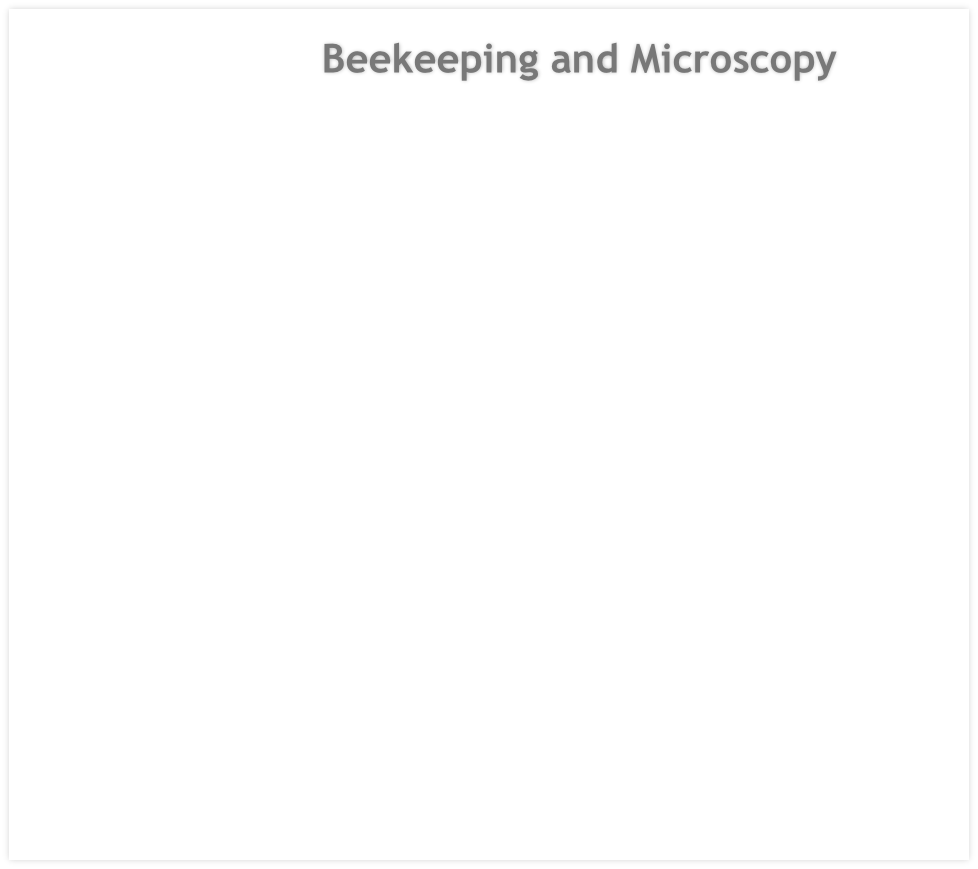
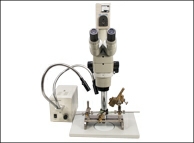
This cannot be carried out without the use of a range of stereomicroscopes that Brunel offer. Price £185 to £344



Brunel looks at identifying the main areas where microscopy has become an essential tool in beekeeping.


Apiculture Beekeeping
Bee Disease


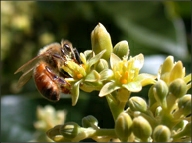
Brunel have a range of microscopes that can be used to study bee disease identification. Price £81 to £239

Beekeeping



Brunel Microscopes Ltd
Registered in U.K. (England) No: 2060047
find us on youtube, facebook and twitter







Bee Insemination



Microscopes and Honeybees





| Pocket microscopes /hand lenses |
| Budget Stereos |
| Lab Stereos |
| Zoom Stereos |
| Long arm Stereos |
| Gemscopes |
| Inspection & QC Stereos |
| Zoom Monoscopes |
| High Power Digital |
| Handheld & Desk Top |
| Digital Stereos |
| Digital Cameras |