
Magnification range of x40 to x800

In microscopy terms the microscopic identification of fish parasites is not an exacting requirement. It is of course possible to spend much more on a microscope, and for those who may wish to take microscopy beyond just fish disease identification then we have many more advanced binocular and trinocular models and would be pleased to provide advice on choice.
However if your objective is to have a microscope that you will use from time to time to keep your fish clean and free from parasites then you need spend no more than the purchase price of our Brunel SP21.
Technical specification
The SP21 has many features that are normally found on microscopes of a much greater price. The optical parts are made from achromatic corrected glass and are standard Royal Microscopical Society (RMS) size. The monocular head rotates trough 360° and has a widefield x10 good quality eyepiece.
The rotating turret is equipped with x4, x10, and x40 achromatic RMS objectives, which when used with the x10 and x20 eyepieces gives a magnification range of x40 to x800 which is ideal for fish parasites that commonly need magnifications of x10 and x400. The x40 objective has a spring loaded front lens element that retracts the lens into the objective on contact with the slide. In addition the stage has a safety stop with a similar purpose.
The slide platform is a full mechanical stage with drop down coaxial controls that makes fine movement of the stage in the required direction very easy. The double vernier scale also allows position identification on the slide.
The focus system is also coaxial with the coarse and fine focus being ideally placed in a low position towards the back of the microscope body. The focus control moves the stage up and down to achieve focus. Beneath the stage is a fully focusable substage condenser with iris diaphragm that is used to focus the illuminating light in the plane of the specimen, with the iris helping to provide clarity of specimen detail. It may sound complicated, but it is very simple to use in practice and fully illustrated instructions are included.
The SP21 base has inbuilt LED illumination with rheostat control that allows the intensity of the lighting to be adjusted to suit the magnification in use.
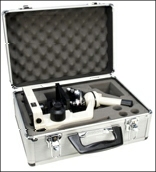
There is an aluminium case available as an accessory, and the SP21 is supplied with a diagnostic kit that includes slides and coverslips, some simple stains and everything needed to get started with skin scrapes and gill swabs. Including full detailed instructions with pictures of what to look for.
Price SP21 + Diagnostic kit -
Price Aluminium carrying case -
Fish Disease Kit only -
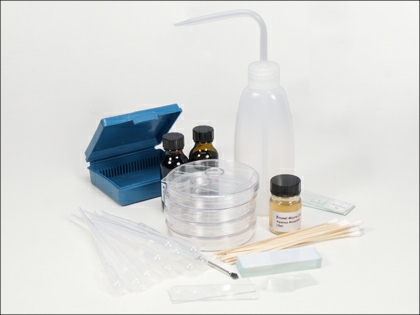

Brunel Fish Disease Kit
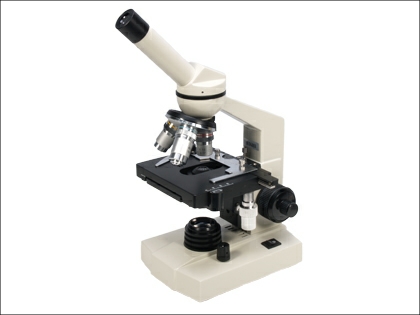
Brunel SP21Fish Disease Microscope


Hobbyist Microscopes
|
|
x4 |
x10 |
x40 |
Objective |
|
x10 eyepiece |
x40 |
x100 |
x400 |
Magnification |
|
x 20 eyepiece |
x80 |
x200 |
x800 |
|






Brunel Microscopes Ltd
Registered in U.K. (England) No: 2060047
find us on youtube, facebook and twitter





Budget Microscopes





Carrying case SP21
 Secure Shop
| Pocket microscopes /hand lenses |
| Budget Stereos |
| Lab Stereos |
| Zoom Stereos |
| Long arm Stereos |
| Gemscopes |
| Inspection & QC Stereos |
| Zoom Monoscopes |
| High Power Digital |
| Handheld & Desk Top |
| Digital Stereos |
| Digital Cameras |